



The engineering behind the quote
Shade, bypass diodes, and why topology is not a preference
Modules wired in series share a current, so the string runs at the pace of its weakest active substring. That single fact decides whether your roof wants a $2,000 inverter or $2,700 of module-level electronics, and it is measurable before anybody quotes anything.
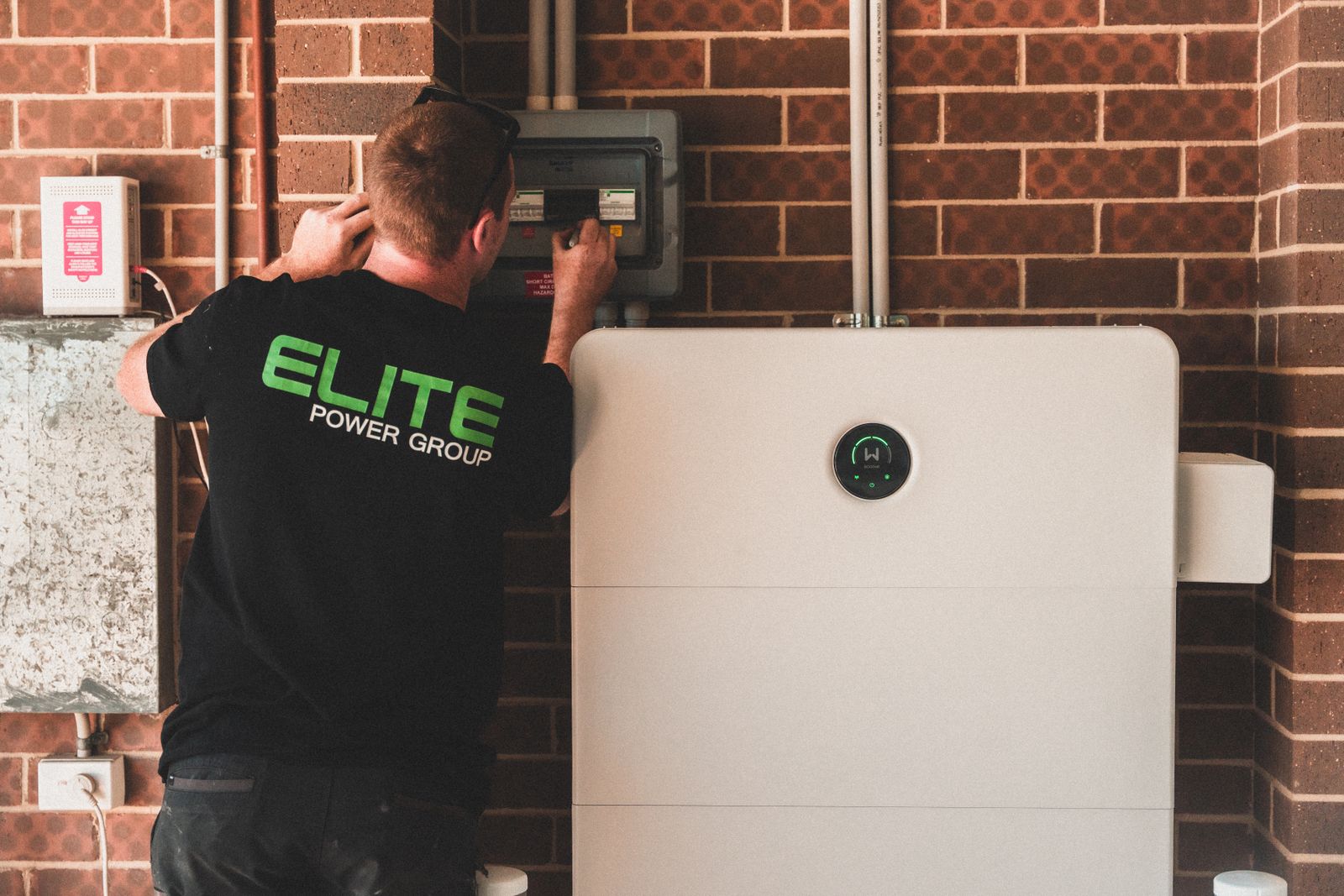 A string inverter with optimisers, Lafayette
Move the sliders
One shaded module, three topologies, three very different numbers
Try 40 percent shade, then 70 percent. The heavier shade costs the string less. That is not a bug in the model, it is the bypass diodes doing their job.
Set the array
Power, not energy. The kWh comes out below.
Try 40 percent, then 70 percent. The heavier shade costs the string less, because a fully shaded substring bypasses out of the circuit while partial shade drags the current of every module in series with it.
Modelled first-year production
- String inverter, no optimisers0 kWh0 percent lost
- String plus DC optimisers0 kWh0 percent lost
- Microinverters0 kWh0 percent lost
What we would recommend
- Extra hardware cost, optimisers
- -
- Extra hardware cost, microinverters
- -
- Simple payback on that extra cost
- -
Model: 1,480 kWh per installed kW DC per year for an unshaded Boulder array; three bypass diodes per module; string output is the mean module voltage factor multiplied by the lowest active substring current; module-level output is the mean of each module's own product. Conversion efficiency 97.8 percent string, 97.5 percent optimiser, 96.8 percent microinverter. Extra cost $0.11 and $0.14 per watt DC. Energy valued at $0.135 per kWh. All sample figures.
Three ways to wire a roof
String, optimisers or microinverters, side by side
| String inverter, no optimisers | String inverter with DC optimisers | Microinverters | |
|---|---|---|---|
| Maximum power point tracking | One or two per inverter, shared by a whole string | Per module, in a DC-DC converter under each panel | Per module, converting to AC on the roof |
| Behaviour under partial shade | Severe. A partly shaded module drags the current of every module in series with it | Low. Each module runs at its own maximum power point | Low. Modules are electrically independent |
| Rapid shutdown, NEC 690.12 | Needs a separate rapid shutdown device at each module | Built into the optimiser | Inherent. No high-voltage DC exists on the roof |
| Monitoring granularity | String total only. You see a number, not a culprit | Per module, in the portal | Per module, in the portal |
| DC voltage on the roof | Up to 600 V DC on the roof | Clamped to roughly 1 V per module when shut down | No DC beyond the module leads |
| Conversion efficiency | 97.5 to 98.3 percent CEC weighted | 97.0 to 98.0 percent CEC weighted, after optimiser conversion loss | 96.5 to 97.5 percent CEC weighted |
| Warranty | 12 years standard, extendable to 20 | 25 years on the optimiser, 12 on the inverter | 25 years |
| Components on the roof | Lowest. Racking, modules, rapid shutdown | One optimiser per module plus a central inverter | Highest. One inverter per module, all of it on the roof |
| Cost, relative | Baseline | About $0.08 to $0.14 per watt more | About $0.10 to $0.18 per watt more |
| Best for | Clean, unshaded, single-plane roofs where every module sees the same sky | Mixed planes, some shade, homeowners who want per-module data and one inverter to service | Complex roofs, several small planes, arrays that will grow later, tree-heavy lots |
String inverter, no optimisers
- Maximum power point tracking
- One or two per inverter, shared by a whole string
- Behaviour under partial shade
- Severe. A partly shaded module drags the current of every module in series with it
- Rapid shutdown, NEC 690.12
- Needs a separate rapid shutdown device at each module
- Monitoring granularity
- String total only. You see a number, not a culprit
- DC voltage on the roof
- Up to 600 V DC on the roof
- Conversion efficiency
- 97.5 to 98.3 percent CEC weighted
- Warranty
- 12 years standard, extendable to 20
- Components on the roof
- Lowest. Racking, modules, rapid shutdown
- Cost, relative
- Baseline
- Best for
- Clean, unshaded, single-plane roofs where every module sees the same sky
String inverter with DC optimisers
- Maximum power point tracking
- Per module, in a DC-DC converter under each panel
- Behaviour under partial shade
- Low. Each module runs at its own maximum power point
- Rapid shutdown, NEC 690.12
- Built into the optimiser
- Monitoring granularity
- Per module, in the portal
- DC voltage on the roof
- Clamped to roughly 1 V per module when shut down
- Conversion efficiency
- 97.0 to 98.0 percent CEC weighted, after optimiser conversion loss
- Warranty
- 25 years on the optimiser, 12 on the inverter
- Components on the roof
- One optimiser per module plus a central inverter
- Cost, relative
- About $0.08 to $0.14 per watt more
- Best for
- Mixed planes, some shade, homeowners who want per-module data and one inverter to service
Microinverters
- Maximum power point tracking
- Per module, converting to AC on the roof
- Behaviour under partial shade
- Low. Modules are electrically independent
- Rapid shutdown, NEC 690.12
- Inherent. No high-voltage DC exists on the roof
- Monitoring granularity
- Per module, in the portal
- DC voltage on the roof
- No DC beyond the module leads
- Conversion efficiency
- 96.5 to 97.5 percent CEC weighted
- Warranty
- 25 years
- Components on the roof
- Highest. One inverter per module, all of it on the roof
- Cost, relative
- About $0.10 to $0.18 per watt more
- Best for
- Complex roofs, several small planes, arrays that will grow later, tree-heavy lots
Boulder County specifics
Five things that shade roofs here, and what to do about each
| Source | When it bites | What it does | What we do about it |
|---|---|---|---|
| Mature cottonwood or silver maple to the south | May to October, worst between 2 pm and sunset | Moving, dappled shade across two or three modules. The hardest case for a plain string | Module-level electronics, or move the array off that plane entirely |
| Chimney or a swamp cooler kerb | Year round, sweeping across the roof through the day | A hard-edged shadow that sits fully on one or two modules at a time | Layout change first. Leave a module width of clearance to the north of the obstruction |
| Plumbing vents and the neighbour's second storey | Winter mornings and late afternoons, when the sun sits low | Small but repeated. Costs more in December than it looks like it should | Relocate vents during a reroof; accept and model the neighbour |
| The Flatirons and the foothills themselves | Late afternoon, west-facing lots in west Boulder and Chautauqua | Terrain horizon cuts the last 30 to 60 minutes of generation year round | Nothing. It goes in the production model so the number you are quoted is the number you get |
| Snow on the lower course | After Front Range storms, typically clearing in 24 to 48 hours | A band across the bottom of the array. On a string, that band can stop the whole thing | Landscape module orientation and module-level electronics both shorten the outage |
Inside a module
What a bypass diode actually does
A 60 or 72 cell module is wired as three substrings in series, with a diode across each one. In normal operation the diodes are reverse biased and do nothing at all. They are insurance, not electronics.
When a substring is shaded enough that it would restrict the current the rest of the string wants to pass, it starts to behave as a resistor rather than a source, heating up. The diode forward biases, current routes around that substring, and the module loses a third of its output but stops being a hot spot. Without diodes, a shaded cell in a long string can reach temperatures that permanently damage the laminate.
So the loss from a shaded module is quantised in thirds. That is why the simulator above jumps rather than sliding smoothly, and it is why a module can go from disastrous to merely unhelpful as the shade gets worse.
- 013 bypass diodes per module, one per substring
- 021/3 of a module lost per bypassed substring
- 03600 V the DC ceiling a plain string runs to on a roof
- 0430 s to drop to 30 V under NEC 690.12 rapid shutdown
- 050 V of array DC with microinverters, by design
Asked on every shaded roof
Questions about shade
Also worth reading: tilt and orientation, which decides how much energy the unshaded hours are worth in the first place.
A module has three bypass diodes, one across each third of its cells. A substring shaded badly enough is bypassed cleanly and drops out of the circuit, and the string carries on at full current through what remains. A substring that is only partly shaded still produces, at a reduced current, and is not shaded enough for the diode to take over. The string then runs at that reduced current through every module wired in series with it.
For shade, effectively yes. Both give each module its own maximum power point tracker. The differences are elsewhere: an optimiser keeps a single central inverter you can service from the ground, while a microinverter puts the conversion on the roof and removes high-voltage DC from the array entirely.
Sometimes, and it is always worth pricing. But a cottonwood that clears the array this year will not in five, and many Boulder trees are protected or belong to a neighbour. We model the array with and without the trim so the decision is informed rather than hopeful.
A sky-view reading from several points across each roof plane, which produces an annual solar access profile for each module position. That becomes a per-module loss figure month by month, and it feeds all three topology models. It is the same instrument the rebate programmes ask for.
Snow on the bottom course behaves like shade, and on a plain string it can stop the array entirely until it clears. Landscape module orientation and module-level electronics both shorten the outage. Do not climb up to sweep it; a scratched module costs more than a week of snow cover.
We will model all three and show you the numbers
Every proposal we write includes the modelled annual kWh for a plain string, for optimisers and for microinverters, with the price of each. You pick.