







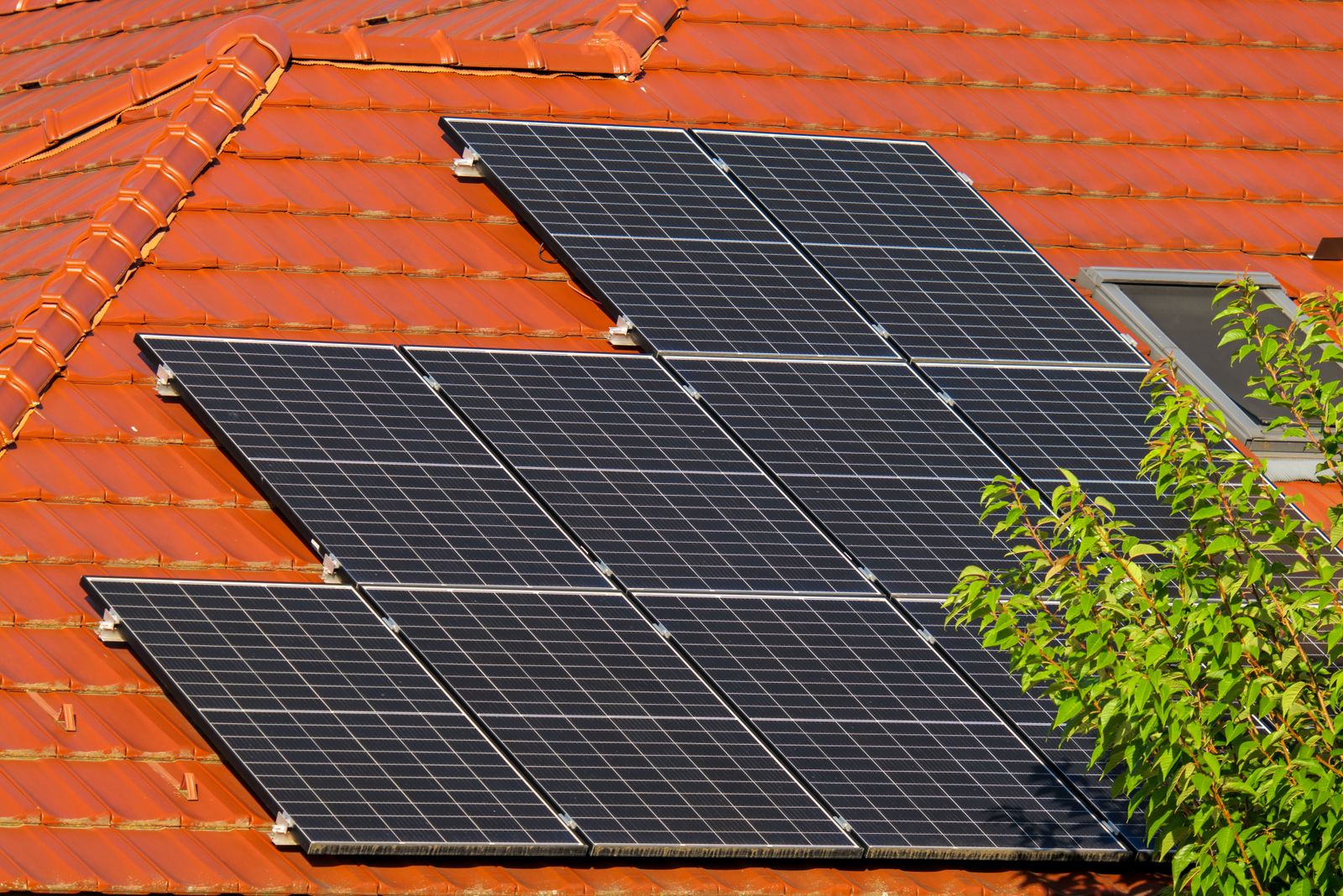

Before the conduit, the calculation
Can your service actually take a charger? Work it out here
A Level 2 charger at 48 A is 11.52 kW of continuous draw on a 60 A circuit. Whether that fits is an arithmetic question with a definite answer, and it decides whether this is a $1,400 job or a $5,200 one.
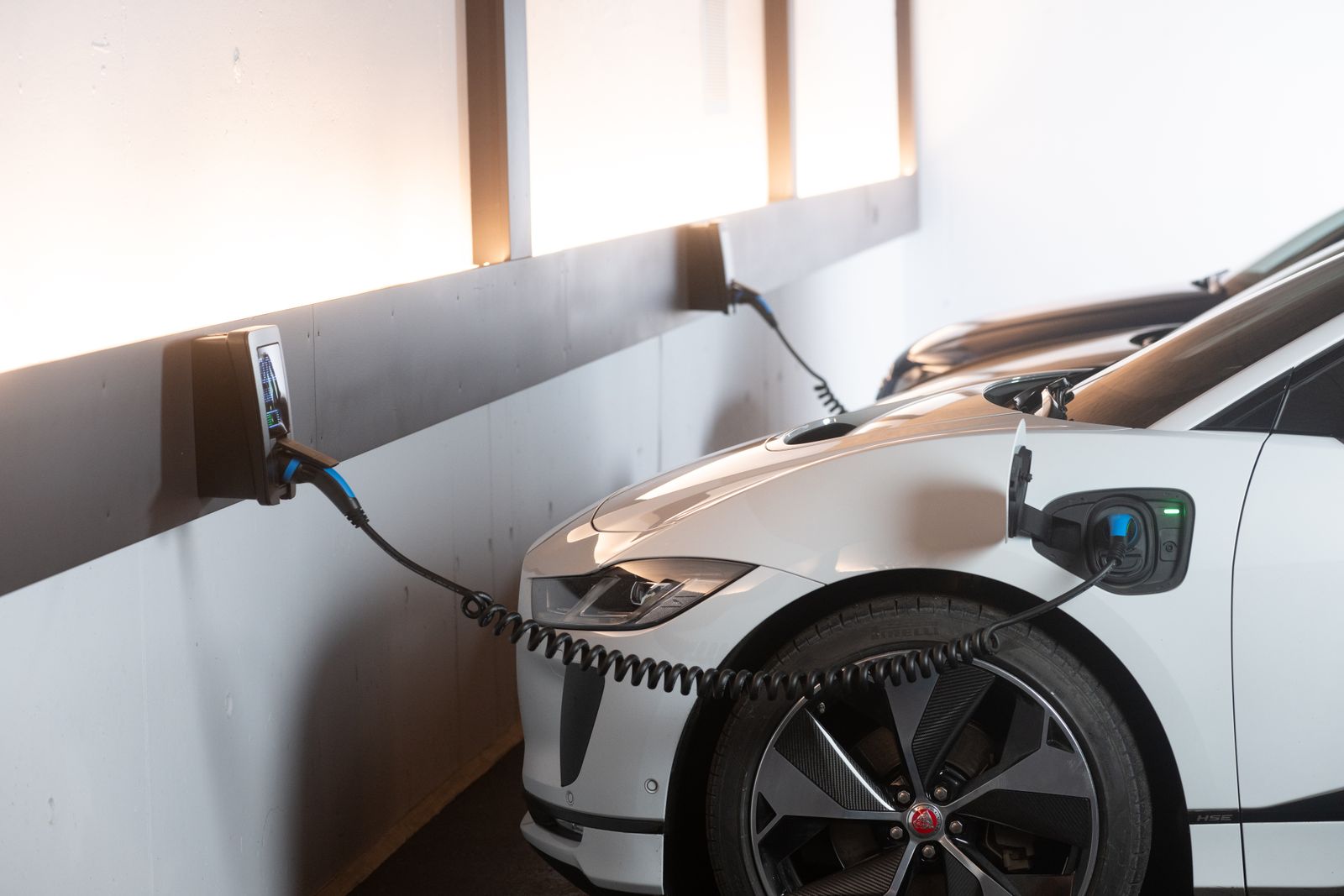
 A 40 A hardwired unit, Indian Peaks
The optional method, NEC 220.83(B)
Your load calculation, written out line by line
Change the inputs and watch every line move. The panel below also runs the 120 percent busbar check, because a charger today and an array next year land on the same busbar.
Your house and your service
A 2 ton condenser is about 5,760 VA. A ducted heat pump with 10 kW of backup strips is about 12,000.
The calculation, written out
- General lighting and receptacles, 3 VA per sq ft
- 0 VA
- Two small-appliance circuits plus laundry, 1,500 VA each
- 4,500 VA
- Fixed appliance nameplates
- 0 VA
- Subtotal of general load
- 0 VA
- First 8,000 VA at 100 percent
- 0 VA
- Remainder at 40 percent
- 0 VA
- Heating or cooling at 100 percent
- 0 VA
- EV charger at 100 percent
- 0 VA
- Total calculated load
- 0 VA
- Divided by 240 V
- 0 A
NEC 705.12(B)(3)(2), the 120 percent busbar rule
- Busbar rating x 1.2
- 0 A
- Less the main breaker
- 0 A
- Room left for a solar backfeed breaker
- 0 A
- Which allows an inverter of
- 0 kW AC
Optional calculation method for an existing dwelling, simplified for a demo site. It is a planning tool, not a permit submission. Your electrician runs the real one against your actual nameplates, and your authority having jurisdiction has the final say.
Power, circuit, conductor
What each charger setting actually costs you
| Charger setting | Breaker required | Power at 240 V | Conductor | Range added |
|---|---|---|---|---|
| 32 A continuous | 40 A | 7.68 kW | 8 AWG copper | About 25 miles of range per hour |
| 40 A continuous | 50 A | 9.60 kW | 6 AWG copper | About 31 miles of range per hour |
| 48 A continuous | 60 A | 11.52 kW | 6 AWG copper | About 37 miles of range per hour |
| 80 A continuous | 100 A | 19.20 kW | 3 AWG copper | About 62 miles of range per hour, rarely justified at home |
kW is how fast the car charges. kWh is what you pay for. A 48 A charger running for three hours moves 34.5 kWh; on the sample off-peak rate that is $2.88, and in the on-peak window it is $8.20.
A worked example
A 1,850 sq ft ranch in Gunbarrel
1,850 sq ft ranch in Gunbarrel, 200 A service, gas range, electric dryer
| General lighting and receptacles, 3 VA per sq ft | 5,550 VA |
|---|---|
| Small appliance branch circuits, 2 at 1,500 VA | 3,000 VA |
| Laundry circuit | 1,500 VA |
| Electric dryer, nameplate | 5,000 VA |
| Dishwasher and disposal | 2,400 VA |
| Electric water heater | 4,500 VA |
| Subtotal of general load | 21,950 VA |
| First 8,000 VA at 100 percent | 8,000 VA |
| Remaining 13,950 VA at 40 percent | 5,580 VA |
| Air conditioning at 100 percent (larger of heat or cool) | 5,760 VA |
| Level 2 charger at 48 A, 240 V | 11,520 VA |
| Total calculated load | 30,860 VA |
| Divided by 240 V | 128.6 A |
128.6 A against a 200 A service. The charger fits with 71 A of headroom, so no upgrade and no load management device. Add a ducted heat pump with 10 kW of backup strips to the same house and the calculation lands near 170 A, which still fits but leaves very little room for anything else.
Panels, breakers and busbars
Questions about charging at home
Then set the schedule: what an off-peak charge is worth.
Because vehicle charging is a continuous load, defined as three hours or more at the full rating. The code requires the branch circuit and its overcurrent device to be sized at 125 percent of that rating. 48 times 1.25 is 60. The same rule is why 32 A chargers sit on 40 A breakers.
NEC 705.12 limits the main breaker plus any solar backfeed breaker to 120 percent of the busbar rating. On a 200 A busbar with a 200 A main that leaves 40 A, which allows an inverter of about 7.68 kW AC. It is the most common reason a solar design has to change after the site visit.
No, it is a code-recognised solution. The device monitors the service and sheds the charger when other large loads run, so the calculated load never exceeds the rating. It typically costs a fifth of a service upgrade, and a car that pauses for twenty minutes while the dryer runs is not a problem anybody notices.
Hardwire, unless you genuinely need to take the unit with you. A NEMA 14-50 receptacle cycled daily at 40 A is a known failure point unless it is an industrial-grade device, and it caps you at 40 A. Hardwiring also lets us use the 48 A setting if the calculation allows it.
Rarely. A 32 A charger delivers 7.68 kW, about 25 miles of range an hour, which refills a normal commuting week overnight. Lower current is easier on an older service, cheaper in conductor, and in most households completely indistinguishable in daily use.
Not in the way people usually mean. The array feeds the panel, the panel feeds the charger, and the meter nets it out. If the car is plugged in at midday on a sunny weekday then yes, you are effectively charging on your own generation. Overnight charging is grid energy, which is exactly why the off-peak window matters.
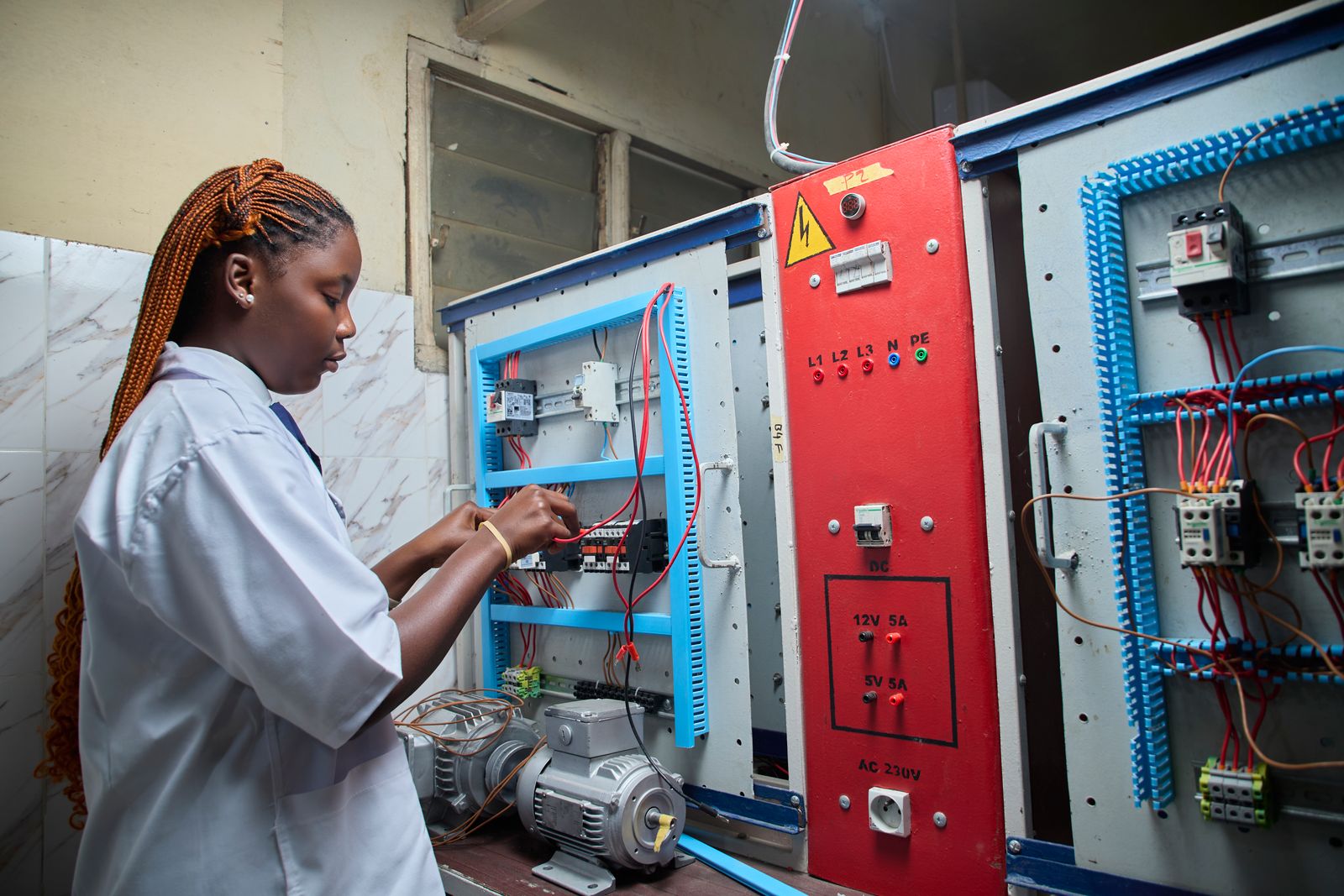
One visit for the charger, the panel and the array
Doing the load calculation, the busbar check and the array design together is how you avoid paying for a service upgrade you did not need.